Sensitivity, Impedance and Room Size: Pairing Speakers With an Amplifier
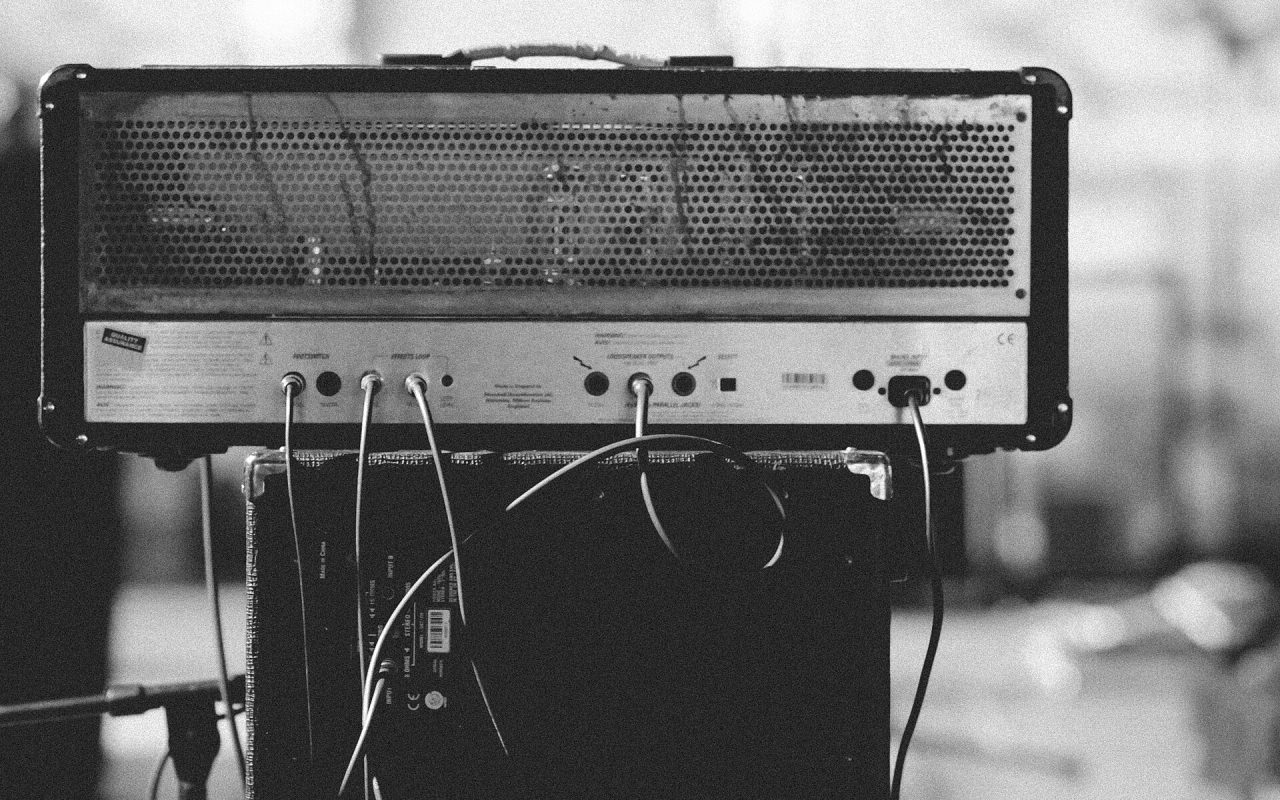
Sensitivity is the sound pressure a speaker produces at one metre from one watt, and impedance is the load it presents to the amplifier. Together those two figures predict whether an amplifier will drive a speaker comfortably or struggle quietly.
Option one: high sensitivity with a valve amplifier
A 95 dB speaker needs only 2 watts for a comfortable 92 dB at three metres.
That is the world of single-ended valve amplifiers, where 8 watts is considered generous.
The trade-off is cabinet size, because high sensitivity usually requires a large box or a horn.
Horns also narrow their dispersion, which makes the sweet spot smaller.
In a small room with one listener, a high-sensitivity system is remarkably dynamic at low power.
Option two: medium sensitivity with a receiver
Most domestic speakers sit between 86 and 90 dB, and most receivers deliver 80 to 120 watts per channel into 8 ohms.
That combination works in rooms up to 60 cubic metres with subwoofers handling the bass.
It is the default pairing precisely because the numbers line up for ordinary rooms.
The failure mode is not lack of volume but lack of headroom on peaks.
A receiver at 80 percent output on a loud explosion is already compressing.
Option three: low sensitivity with a powerful amplifier
An 83 dB speaker with a 4 ohm minimum impedance needs 200 watts to reach the same output as the high-sensitivity example at 25 watts.
Such speakers are usually small sealed designs with heavy cones, and they reward power with clean bass.
A receiver rated at 100 watts into 8 ohms often delivers only 130 watts into 4 ohms, which is not the doubling a good power amplifier provides.
The result is a system that plays loudly on simple material and runs out of composure on dense soundtracks.
Reading the 4 ohm rating, not the 8 ohm figure, predicts this.
Option four: what impedance really means
Impedance is not a constant, and a speaker rated at 8 ohms may dip to 4 ohms at one frequency and rise to 30 at another.
The dip is where the amplifier delivers the most current, and that is where cheap designs fail.
A minimum impedance figure is more informative than a nominal one, and it is often left out of the specification sheet.
Review sites that publish impedance curves are worth more than any single number on the box.
An amplifier with a robust power supply survives a 3 ohm dip; a lightweight one clips.
Option five: room size changes the requirement
A 25 cubic metre room needs about 6 dB less output than a 100 cubic metre room for the same loudness.
That 6 dB is a factor of four in power.
In a small room, a modest amplifier with 88 dB speakers is entirely sufficient.
In a large room, the same system runs near its limit on every action sequence.
Matching amplifier power to room volume is more useful than matching it to the speaker's maximum rating.
Option six: the subwoofer changes the arithmetic
A crossover at 80 Hz removes the lowest two octaves from the main amplifier's workload.
Those octaves consume the most power, often 60 percent of the total.
With bass redirected, a 50 watt amplifier drives the mains comfortably in a room that would otherwise need 200 watts.
This is why small speakers plus a powered subwoofer so often outperform towers on the same amplifier.
The subwoofer has its own amplifier, and it is usually much larger than the receiver's.
Option seven: bridging and bi-amping claims
Bridging two amplifier channels doubles voltage and halves the minimum impedance the amplifier can drive.
An amplifier stable to 4 ohms in stereo is only stable to 8 ohms bridged.
Bi-amping with a passive crossover in the speaker gives almost no benefit, because the crossover still splits the power.
Active bi-amping, with the crossover before the amplifiers, does help and requires a processor.
Most bi-amping claims in domestic systems are marketing rather than engineering.
Option eight: measuring what you actually get
A cheap sound level meter at the listening seat shows whether the system reaches cinema reference without strain.
Reference level is 85 dB average with 105 dB peaks, which most domestic systems cannot sustain for long.
Most households listen at 70 to 78 dB average, which is 10 dB below reference and needs a tenth of the power.
That fact alone explains why modest receivers satisfy most rooms.
Measure the level you actually use before spending on amplifier power you never reach.
Option nine: valve, class A/B and class D
Class A/B receivers dominate the market because they are cheap to build and reliable.
Class D designs are efficient, small and increasingly clean, and they suit subwoofers particularly well.
Valve amplifiers clip gracefully, which flatters them at low power into sensitive speakers.
Each topology has a signature, but the matching problem is the same: impedance, sensitivity and room volume.
Choose the topology after the matching is settled, not before.
Option eleven: damping factor and cable length
Damping factor is the amplifier's ability to control the cone after the signal stops.
It falls as cable resistance rises, and in long runs to surround speakers that matters more than the number in the brochure.
Thick, short cables preserve the figure; thin, long ones destroy it.
Rear speakers 12 metres away with 1.5 square millimetre cable lose most of the amplifier's control at low frequencies.
Use 2.5 square millimetre cable beyond 8 metres and the problem mostly disappears.
Option twelve: what distortion figures hide
A total harmonic distortion figure of 0.05 percent is usually measured at half power into 8 ohms.
At full power into 4 ohms the same amplifier may produce 1 percent or more.
The figure that matters is the power available at the distortion limit, which few manufacturers publish.
Reading the weight of the amplifier tells you more about its power supply than the second figure after the decimal point.
Specifications are written to reassure, and the matching question is answered by the load curve instead.
Option ten: the pairing checklist
Write down sensitivity, minimum impedance, room volume and the furthest seat distance.
Then check the amplifier's 4 ohm rating and its power supply size in kilograms, which is a rough proxy for current capability.
If the room is large and the speaker dips below 4 ohms, choose the amplifier with the heavier supply.
If the room is small, spend the difference on the subwoofer instead.
Sensitivity, impedance and room size form a triangle, and any pairing that ignores one side of it will disappoint at volume, which is exactly when a cinema soundtrack asks the most.