Channel Count or Power: How to Choose an AV Receiver for a Real Room
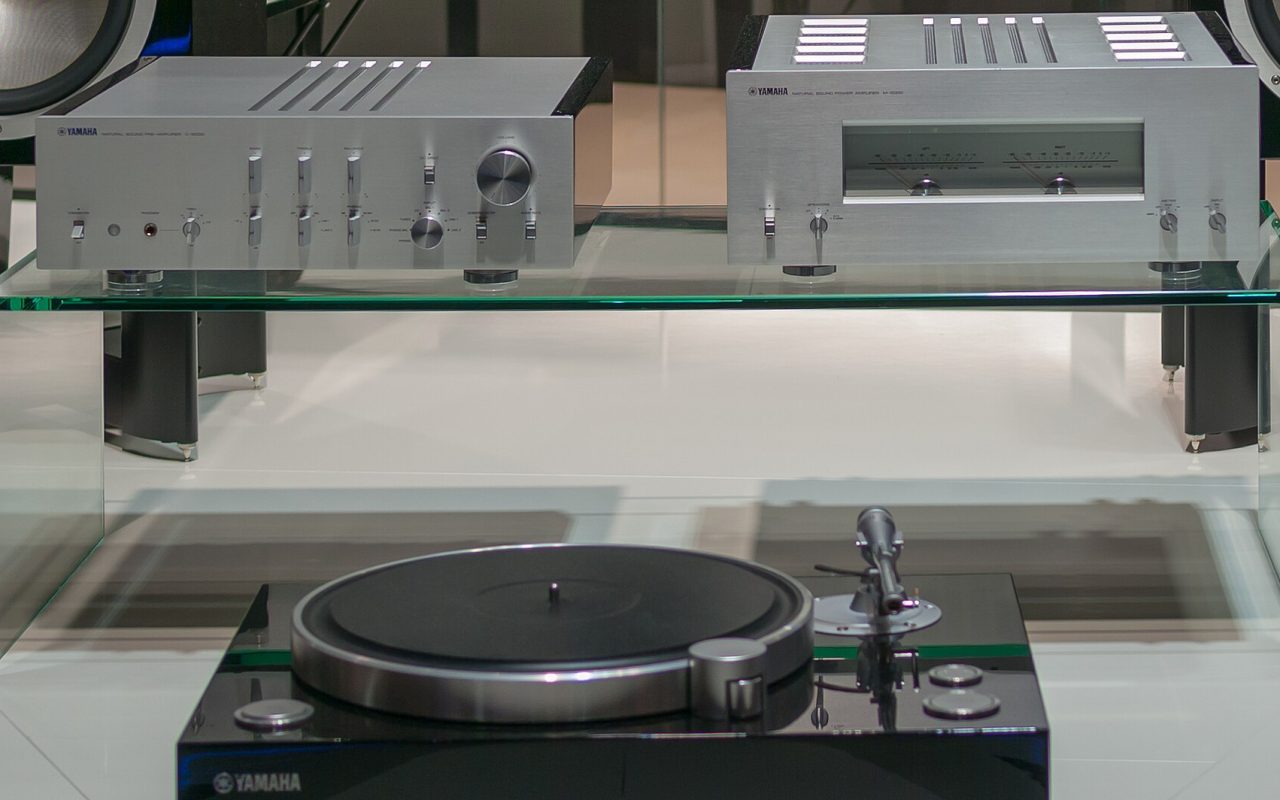
An AV receiver is a preamplifier, a radio of inputs and a bank of power amplifiers in one box, and the three parts rarely deserve equal attention. Buyers compare channel counts because they are printed in large type, while the two things that change the sound sit further down the specification sheet.
Option one: the five channel receiver
A five channel receiver drives the classic layout: three across the front and two beside the seats.
It costs less than a nine channel model and puts more of the budget into the power supply.
For a room under 35 cubic metres with two rows of seats, five channels cover the geometry honestly.
The limitation appears only when height channels are wanted, and adding them later means replacing the whole box.
If the ceiling is low and the seating is single row, five channels is often the correct answer.
Option two: the seven channel receiver
Seven channels allow either a 7.1 layout or a 5.1.2 layout with two height speakers.
In a domestic room, two height channels above the front stage deliver more noticeable improvement than two rear surrounds.
That makes seven channels the practical minimum for anyone interested in object-based audio.
The power supply is shared across all channels, so power per channel falls as more are driven.
Seven channels driven simultaneously at cinema level is beyond most mid-range receivers.
Option three: the nine or eleven channel receiver
Nine and eleven channel models exist for rooms that can host four height speakers and four surrounds.
That requires a room at least 4.5 metres wide and 5.5 metres deep, with seats well clear of the walls.
Below that size, the extra channels reproduce reflections rather than distinct events.
They also cost twice as much and weigh twice as much, which matters if the shelf is floating.
Channel count should follow room volume, not ambition.
Option four: power per channel and what it means
A receiver quoted at 100 watts per channel is usually quoting two channels driven.
Driven to seven channels, the same amplifier may deliver 45 watts each.
The figure is not dishonest, it is simply measured under conditions that flatter it.
Look for a five or seven channel driven rating, or for the total power consumption figure on the rear panel.
A 500 watt total draw cannot produce seven times 100 watts of audio.
Option five: pre-outs and external amplification
Pre-outs allow the receiver to drive external power amplifiers for the front three channels.
That arrangement puts the demanding channels on a supply designed for two, and leaves the receiver for surrounds.
It is the cheapest route to genuine headroom without replacing the processor.
Check that pre-outs exist on all channels, not only the subwoofer and front pair.
Pre-outs are the one feature worth paying for in advance, because they cannot be added later.
Option six: room correction software
Correction systems measure the room and apply filters per channel, which usually changes the result more than 30 watts of power.
They differ in frequency range, resolution and how much they correct above the transition frequency.
A system that corrects bass only is often preferred, because correcting the midrange alters the speaker's character.
Automatic correction also sets distances and levels, which is half its value.
If two receivers cost the same and one has better correction, take the correction.
Option seven: HDMI inputs and switching
Three to five inputs cover most households; more inputs rarely get used.
What matters is that the input supports the resolution, frame rate and dynamic range of the sources attached.
An input that passes 4K at 60 Hz but not at 120 Hz will be the one your console wants.
Video passthrough in standby is worth checking too, since some receivers cannot pass a signal when off.
Count the sources first, then read the input specifications.
Option eight: the weight test
A receiver weighing 8 kilograms and one weighing 15 kilograms at the same price are not the same product.
The difference is the transformer and the heatsink, which is where power comes from.
Weight is a crude proxy and it is more reliable than most published figures.
A heavy receiver also tends to have better thermal behaviour at sustained output.
Pick it up before you read the brochure.
Option nine: heat and ventilation
A receiver dissipates 10 to 30 percent of its consumption as heat, which in a closed cabinet becomes a problem.
It needs 100 millimetres of clearance above and open air at the sides.
A cabinet with a closed back and no fan shortens the amplifier's life and triggers protection circuits.
A small quiet fan at the rear of the cabinet solves it for the price of a meal.
Ventilation is the most neglected installation detail in home theater.
Option ten: streaming and network features
Built-in streaming covers convenience, not sound quality.
AirPlay, Chromecast and Bluetooth are useful for casual listening and irrelevant for film.
A network connection is also how firmware updates arrive, and updates fix HDMI compatibility problems regularly.
Check that the receiver can be updated over the network rather than by USB.
Connectivity should be judged by what it enables, not by how many logos appear on the box.
Option eleven: matching the receiver to the speakers
Speakers below 88 dB sensitivity or below 6 ohms impedance need more current than the specification implies.
A receiver rated at 100 watts into 8 ohms but not rated into 4 ohms will not drive such speakers cleanly.
With a subwoofer handling bass, the load on the receiver falls sharply and modest power becomes sufficient.
The speaker is the load and the receiver is the supply, and the supply has to fit the load.
Option twelve: the buying sequence
Write down the room volume, the speaker sensitivity, the number of seats and the sources.
Then choose correction software, then pre-outs, then channel count, then power.
Price follows those four in that order, and buying in that order avoids paying for channels the room cannot use.
A receiver is a supply of current and a set of decisions about the room, and the decisions matter more than the current.