Bass Management and Crossover Settings: Four Setups Compared
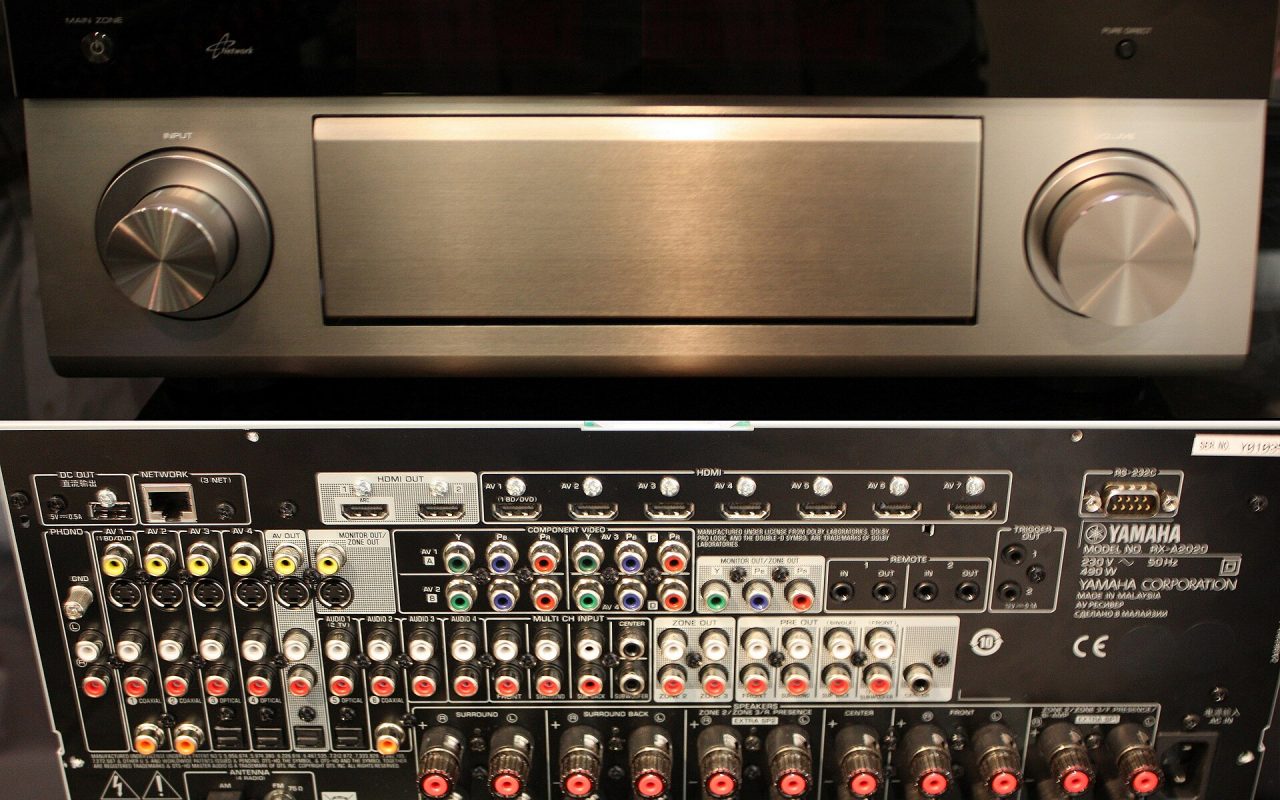
Bass management is the process of deciding which speaker reproduces which frequency range, and the crossover point is where that decision is made. It is the most consequential setting in a receiver and the one most often left at its default.
Option one: the 80 Hz default
An 80 Hz crossover suits most systems, because it sits above the range where bass becomes directional and below the range where small speakers struggle.
It also matches the standard used when soundtracks are mixed, which is an argument in itself.
The default is a starting point, not a universal answer.
If the mains reach 60 Hz comfortably, 80 Hz lets them contribute some low bass.
Most receivers set this automatically after measuring the speakers.
Option two: crossing higher at 100 or 120 Hz
Small satellites and on-wall speakers usually run out of excursion below 100 Hz.
Crossing higher removes that excursion from the driver, which cleans up the midrange noticeably.
Above 120 Hz the subwoofer's location becomes audible, because bass localisation begins around there.
If the crossover must go above 120 Hz, the subwoofer should sit at the front of the room.
Higher crossovers demand more from the subwoofer's mid-bass quality.
Option three: crossing low at 60 Hz
Tower speakers with genuine output at 45 Hz can be crossed at 60 Hz, letting them handle more of the bass.
This uses the mains' advantages: two bass sources at the front, and no localisation issue.
It also puts more demand on the receiver's amplifier and on the towers' woofers.
With a powerful subwoofer and modest mains, 60 Hz often produces a fuller result.
The risk is a gap if the towers roll off steeply below 70 Hz.
Option four: full range mains plus LFE only
Setting the mains to large sends them everything, and the subwoofer handles only the LFE channel.
That arrangement can work with genuinely full range towers and a strong amplifier.
The risk is that the mains and the subwoofer both reproduce the same low frequencies, with different phase, which produces cancellations.
Double bass from two sources is rarely additive and often subtractive.
Full range mains are usually a mistake in a surround system.
Option five: matching the crossover to the speaker's lower limit
The usual advice is to set the crossover one octave above the speaker's minus three decibel point.
A speaker reaching 50 Hz is crossed at 100 Hz, not 50.
Crossing at the limit itself leaves the driver struggling exactly where the filter is least steep.
Manufacturers rarely publish the right figure, so measurement is the reliable route.
One octave of margin is the single most useful rule in bass management.
Option six: subwoofer distance and phase
The receiver's distance setting for the subwoofer is a delay, not a measurement of physical distance.
Because the subwoofer's own electronics add delay, the correct setting is often 1 to 3 metres longer than reality.
Getting it right aligns the subwoofer with the mains at the crossover point.
A wrong setting produces a dip or a peak exactly where the two overlap.
Adjust the subwoofer distance while listening to a repeating bass line, not a single tone.
Option seven: LFE level and the +10 dB rule
The LFE channel in a film mix is recorded 10 dB lower than the other channels, and the receiver restores it.
That means the subwoofer typically runs 10 dB hotter than the mains during effects.
Turning the subwoofer down to match the mains level removes the impact the mix intended.
The correct setting is the one that produces the reference level, not the one that sounds balanced on music.
Films and music genuinely need different subwoofer levels.
Option eight: multiple subwoofers and independent crossovers
Two subwoofers can be given separate distances and levels, which allows their outputs to reinforce rather than cancel.
Placing them at the midpoints of opposite walls usually gives the flattest result.
Independent delay is the tool that makes the placement work.
Without delay control, two subwoofers can be worse than one.
Two subwoofers without alignment is a coin toss.
Option nine: crossover slope
A 24 dB per octave slope isolates the subwoofer from the mains more sharply than a 12 dB slope.
Sharper slopes protect small speakers but can sound abrupt if the drivers do not blend.
Most receivers use 24 dB Linkwitz-Riley filters, which sum flat when aligned.
Where a receiver offers a choice, 24 dB is usually the safer default.
Slope choice matters most when the speakers are small.
Option ten: measuring the crossover region
A measurement microphone at the seat will show a dip or a hump around the crossover frequency.
A hump means the two sources are adding; a dip means they are cancelling.
Adjusting distance by 0.2 metre steps moves the cancellation out of the region.
This is a fifteen minute procedure that fixes the most audible bass problem.
The crossover region is where most bass complaints actually originate.
Option eleven: the double bass problem
Running mains full range with a subwoofer often creates a peak around 80 Hz and a null around 120.
The peak is heard as boom and the null as thinness.
Setting the mains to small removes both, because only one source reproduces that range.
This single setting change solves the majority of home theater bass complaints.
Small is not an insult to the speaker, it is a routing decision.
Option thirteen: bass management with height channels
Height speakers are almost always small, and their crossover belongs at 120 Hz or higher.
Setting them to large is a common configuration error, because they cannot produce anything below 100 Hz.
When all small speakers are crossed high, the subwoofer carries more of the mid-bass, which then needs to sit near the front.
A single subwoofer at the rear corner cannot serve a 150 Hz crossover.
Every crossover decision moves work to a different driver, and somebody has to be able to do it.
Option fourteen: what to listen for after setting it up
Play a scene with a male voice and a low sustained note at the same time.
If the voice thickens when the note enters, the crossover region is peaking.
Then play a scene with a door slam and listen for whether the impact arrives with the picture or slightly after it.
Late impact means the subwoofer distance is too short.
Two listening tests catch most bass management errors before any measurement equipment is unpacked.
Option twelve: a starting configuration
Set every speaker to small, crossover to 80 Hz, subwoofer distance to the measured value plus one metre, and LFE level at reference.
Then measure, adjust the subwoofer distance for the smoothest crossover region, and raise the crossover if the mains are small.
Listen to a familiar film and note whether dialogue remains clear during loud effects.
Bass management is the plumbing of a surround system, and plumbing that is right is never noticed at all.