Preamp Plus Power Amp or One Receiver: Comparing Two Paths
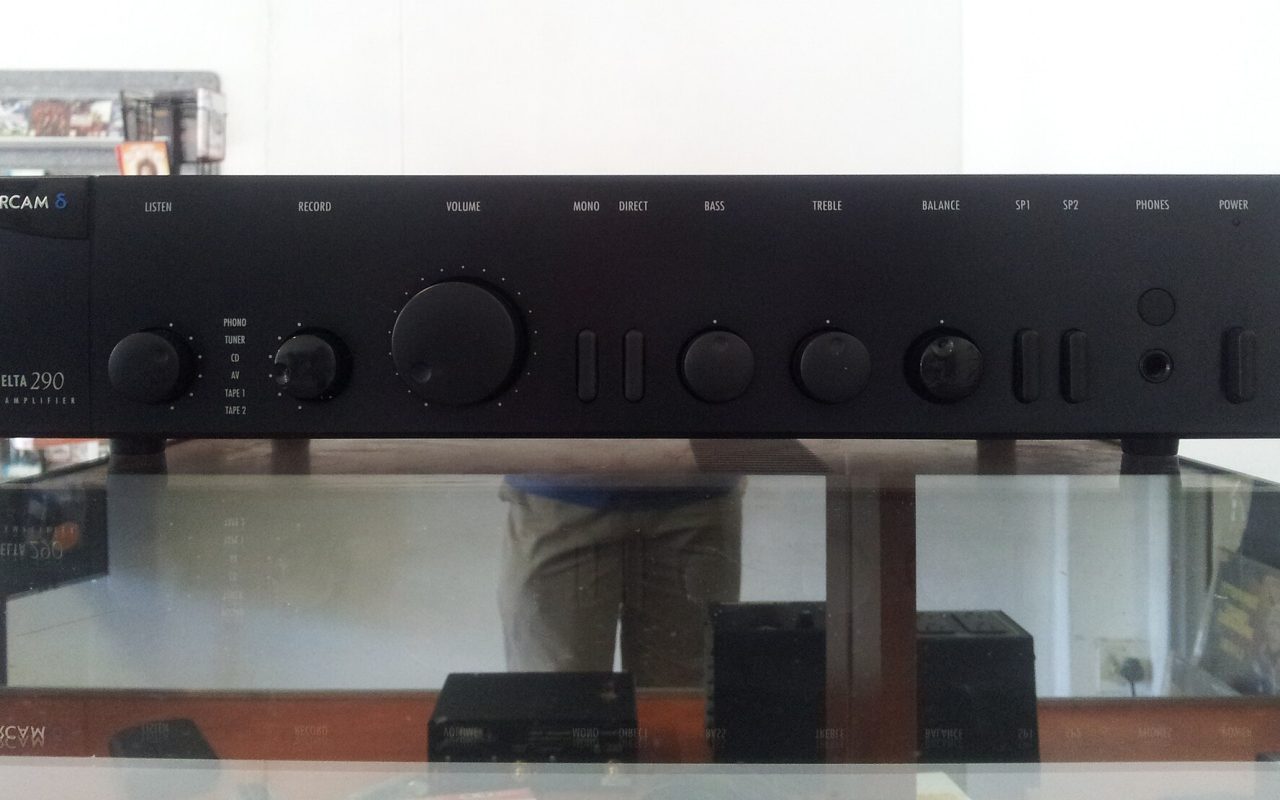
A separates system splits processing from amplification, so the box that decides what to play and the box that supplies current are different objects. A receiver combines them, which saves money, space and cable, and concentrates heat in one place.
Option one: the single receiver
One box handles switching, decoding, correction and amplification for every channel.
It is the cheapest way to reach a working system and the easiest to operate for a household.
Its weakness is the shared power supply, which limits output when many channels are driven.
Its second weakness is heat, because everything sits in one chassis.
For rooms under 40 cubic metres with efficient speakers, the compromise is small.
Option two: receiver plus external power amplifier for the front three
The receiver still processes and drives the surrounds, while a separate amplifier drives left, centre and right.
Those three channels carry most of the energy in a film, so moving them off the shared supply changes the character of loud passages.
The cost is one extra box and one extra set of cables.
Pre-outs are mandatory, which is why their presence should be checked before buying any receiver.
This is the best value step in the separates direction.
Option three: an AV preamplifier with seven power amplifiers
A dedicated processor plus a multichannel power amplifier gives each section its own supply and its own chassis.
Power output is genuine across all channels, and heat is divided between boxes.
The cost is roughly double a receiver of similar processing quality.
Upgrades then become modular: the processor can change without touching the amplifiers.
This is the arrangement that lasts a decade with one component replaced.
Option four: stereo integrated amplifier with home theater bypass
A stereo amplifier for music, with a bypass input that hands the front channels to the AV processor for film.
Music listening then uses a short signal path with no video processing in it.
Film listening uses the processor and the same front speakers.
The bypass feature is the critical one, and not every stereo amplifier has it.
For households that listen to music more than they watch films, this is the most satisfying split.
Option five: active speakers with a processor
Active speakers contain their own amplifiers matched to their drivers, so the processor only supplies line level signals.
The matching is done by design rather than by the buyer.
Cable runs become low level and thin, which simplifies installation.
Each speaker needs mains power, which is the practical obstacle in a living room.
Where power is available at each position, active systems are the cleanest engineering answer.
Option six: cost distribution
A receiver at a given price spends roughly 60 percent on amplification and 40 percent on processing.
Dividing the same money between a processor and a power amplifier removes the shared supply but adds two chassis and two power cords.
At the low end, the receiver wins clearly.
At the middle, receiver plus front amplifier wins.
At the high end, separates are the only way to get the current required.
Option seven: heat and reliability
Every 10 degrees of temperature rise halves the life of electrolytic capacitors.
A receiver in a closed cabinet runs 15 to 25 degrees hotter than separates in open air.
Separates divide the heat between two chassis, each with its own ventilation.
The reliability advantage is real and rarely mentioned in reviews.
Ventilation, not construction quality, is the usual cause of failure.
Option eight: cable and space budget
Seven channels of speaker cable plus interconnects between processor and amplifier adds up.
A separates stack needs 400 millimetres of shelf depth and 200 millimetres of height above.
Receivers fit in furniture that separates cannot.
In a shared living room, the furniture often decides the architecture.
Physical space is a legitimate specification.
Option nine: upgrade paths
HDMI standards change faster than amplification does, so the processor ages faster than the power amplifier.
Separates let the processor be replaced while the amplifiers stay for fifteen years.
A receiver must be replaced as a whole when HDMI moves on.
Over a decade, the modular path often costs less in total.
It also generates less electronic waste, which is a reasonable secondary argument.
Option ten: operational complexity
Two remotes, two power switches and a sequence to remember is a real cost in a family home.
A universal remote or a control system solves it, at a price.
Receivers win on simplicity for everyone who is not the person who set it up.
Household acceptance is a performance requirement like any other.
If the system is too complicated to switch on, it will not be used.
Option eleven: measuring the difference
Play a dense action sequence at your normal level with the receiver alone, then with the front amplifier connected.
Listen for compression on dialogue during loud effects, and for hardening in the midrange.
If nothing changes, the receiver was already adequate and the money is better spent elsewhere.
If the difference is obvious, the shared supply was the limit.
This test costs nothing and answers the question for your room rather than for a review.
Option thirteen: the power conditioner question
A power conditioner claims to clean the mains supply, and in most houses the supply is already adequate.
What genuinely helps is not sharing a circuit with appliances that draw large currents intermittently.
A dedicated spur to the equipment rack removes more noise than most conditioners do.
Where a spur is impossible, a conditioner is a modest improvement at best.
The money is usually better spent on the amplifier itself.
Option fourteen: trigger cables and power sequencing
A twelve volt trigger lets the processor switch the power amplifier on and off automatically.
Without one, the household has to remember two switches in the right order.
Powering the amplifier last avoids a thump through the speakers.
Most power amplifiers have both a trigger input and a switch, and using the trigger is the whole point of separates.
The details that make a separates system pleasant are small, cheap and almost never mentioned in reviews.
Option twelve: the decision rule
Efficient speakers, a small room and moderate levels: one receiver.
Difficult speakers or a large room: receiver plus front amplification.
Music-first with film second: stereo amplifier with bypass plus a processor.
Any of those paths works when the power supply matches the load, and the box count is a consequence of the room rather than a mark of seriousness.