Power Ratings Into 4 Ohms: Reading Receiver Specs Without Getting Fooled
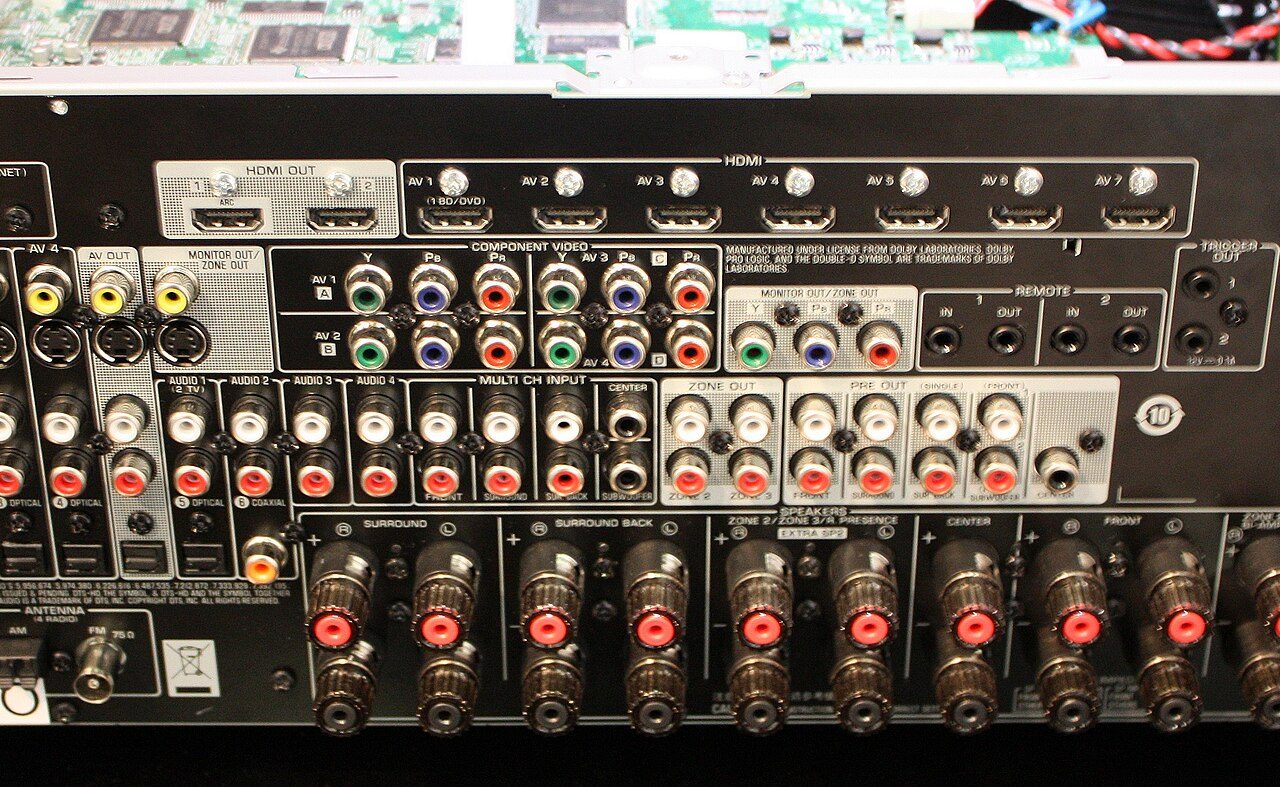
Power into 4 ohms is the figure that separates amplifiers with a real power supply from amplifiers with a large number on the carton. It matters because a great many domestic speakers dip below 6 ohms at some frequency, whether or not the box says so.
Option one: the 8 ohm only rating
A receiver that publishes only an 8 ohm figure has told you something by omission.
It may still drive a 4 ohm load at reduced power, and it may simply shut down on peaks.
The absence of the figure is a warning, not a verdict.
Check the rear panel for the total power consumption, which caps what is possible.
Where the consumption figure is close to the quoted output times five, the supply is adequate.
Option two: doubling into 4 ohms
A true dual-mono design doubles its output as the impedance halves, because voltage stays constant and current doubles.
Very few receivers do this, and those that claim it are usually quoting peak rather than continuous figures.
A 60 percent increase is a realistic result for a good receiver.
Doubling is a property of the power supply, not of the marketing department.
If the specification doubles cleanly with a distortion figure attached, the supply is serious.
Option three: the distortion condition
Power is meaningless without a distortion limit, and the limit is usually quoted as a percentage.
One percent at 1 kHz into one channel is a common, generous condition.
Point one percent across 20 Hz to 20 kHz into two channels is a stricter and more useful measure.
Compare only like with like, and prefer the stricter condition even at a lower number.
The bandwidth of the measurement tells you as much as the wattage.
Option four: peak versus continuous
Peak power can be sustained for milliseconds and has little to do with how loud a system plays for two hours.
Continuous power, sometimes called RMS, is the figure that predicts thermal behaviour.
Some manufacturers quote both, with the peak figure in larger type.
Film soundtracks put long low-frequency demands on an amplifier, which is exactly where peak ratings fail.
Look for the smaller number, it is the honest one.
Option five: all channels driven
Two channels driven at 100 watts can become seven channels at 40 watts when all are active.
The shared supply cannot deliver the sum of the individual ratings.
Home theater soundtracks rarely drive all channels at full output simultaneously, so the practical figure sits between the two.
Action sequences do drive most channels at once, briefly and repeatedly.
An all-channels-driven rating, when published, is the most useful single number on the sheet.
Option six: the transform weight test
A toroidal transformer of 500 watts weighs 4 to 5 kilograms; a 300 watt unit weighs 2 to 3.
Since the transformer dominates the weight, the scale in the shop is a specification reader.
A receiver at 9 kilograms cannot contain a large transformer and a large heatsink both.
That arithmetic is rough and it is rarely wrong.
Weight per channel is a better guide than watts per channel.
Option seven: protection circuits and clipping
An amplifier that runs out of current clips, and clipping generates high frequency energy that damages tweeters.
Protection circuits cut the output before damage, which is heard as a dropout rather than as distortion.
A receiver that shuts down during a loud scene is telling you its supply is exhausted.
External amplification for the front three channels is the standard remedy.
Repeated protection events are a specification, arriving late.
Option eight: what a 4 ohm load actually asks
At 4 ohms an amplifier must deliver twice the current for the same voltage, which doubles the heat.
Heat is what limits sustained output, so the heatsink size matters as much as the transformer.
A slim receiver 100 millimetres tall has very little heatsink area.
Slim designs compensate with fans or with conservative ratings.
The physical size of the box is a power specification in disguise.
Option nine: the subwoofer's separate amplifier
A powered subwoofer takes the hardest load off the receiver entirely.
Redirecting everything below 80 Hz can halve the receiver's power demand on film material.
That single change makes a modest receiver adequate in a room that would otherwise need external amplification.
It is also the cheapest upgrade in the whole system.
Bass management is the most effective power upgrade available.
Option ten: bi-amping and bridging claims
Bridging two channels doubles voltage and halves the safe load, so an 8 ohm speaker becomes a 4 ohm load on each channel.
Bi-amping with the speaker's passive crossover still passes all the power through the same crossover.
Neither technique adds power to the system; both redistribute it.
Active bi-amping, with a crossover before the amplifiers, genuinely helps and needs a processor.
Most domestic bi-amping produces no measurable benefit.
Option eleven: measuring your own peak demand
A sound level meter at the seat tells you the loudest level you actually use.
Most households peak at 95 to 100 dB, not the 105 dB of cinema reference.
At 100 dB with 88 dB speakers at three metres, the demand is around 30 watts per channel.
That figure is well within a modest receiver, provided the load stays above 6 ohms.
Measuring your level is more informative than comparing watts.
Option thirteen: the marketing terms worth ignoring
Terms such as dynamic power, high current design and audiophile grade capacitors carry no agreed definition.
Two measurements do carry meaning: continuous power into a stated impedance across the audio band, and total power consumption from the wall.
Everything else on the box is a description of intent rather than of capability.
An amplifier with a large transformer and a large heatsink will state those two figures without embarrassment.
Numbers that can be checked are the only numbers worth comparing between brands.
Option fourteen: what a momentary dip to 3 ohms does
A speaker rated at 8 ohms nominal may fall to 3 ohms at one frequency in the bass, which is where the amplifier delivers peak current.
If that frequency coincides with a loud passage, the protection circuit may activate.
The symptom is a brief silence rather than distortion, which owners often attribute to a faulty unit.
External amplification or a higher crossover point removes the demand entirely.
The dip frequency is rarely published, and a review that measured it is worth ten pages of specification.
Option twelve: when the specification matters most
Low sensitivity speakers, a large room, high listening levels and no subwoofer form the demanding case.
Any two of those four together justify checking the 4 ohm rating carefully.
All four together justify external amplification for the front stage.
Everything else is a comfortable case where the figures on the box are adequate.
Power ratings matter most in exactly the situation where nobody reads them, which is why the four ohm figure deserves a second look before the card comes out.