Absorption, Diffusion or Both: Comparing Treatment Strategies
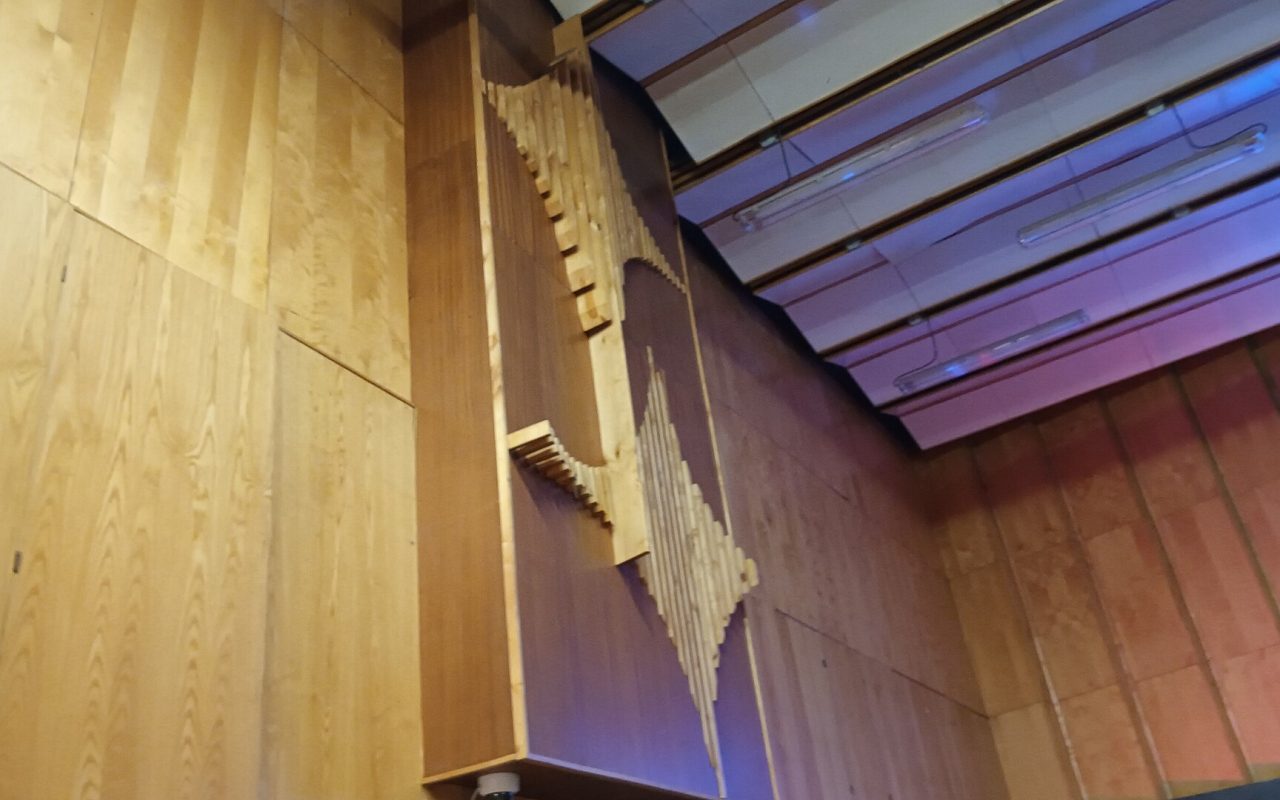
Absorption removes reflected energy and diffusion scatters it, and the two produce very different rooms from the same measurement of reverberation time. Choosing between them is a question about what kind of sound you want, not only about numbers.
Option one: absorption only
A fully absorbed room has a short decay, a precise image and very little sense of space.
Dialogue becomes exceptionally clear, which suits film dialogue recorded in a studio.
Music loses its ambience, because the room no longer contributes any.
Over-treated rooms sound flat and slightly oppressive over a long evening.
Absorption is the correct tool for the first reflection points and the wrong one for entire walls.
Option two: diffusion only
A diffused room keeps its energy but spreads it in time and direction.
The image is less precise than with absorption, and the sense of space is larger.
Reverberation time falls only slightly, so a room that is already too live stays too live.
Diffusers need depth and distance to work, which rules them out in small rooms.
Diffusion improves a good room and cannot rescue a bad one.
Option three: absorption at the front, diffusion at the back
Treating first reflection points and the front wall with absorption keeps the direct sound clean.
Diffusing the rear wall returns energy in a scattered form that reads as space rather than echo.
This is the arrangement used in most recording studios and most good home theaters.
It balances precision with liveliness.
The front is where clarity is won and the rear is where space is added.
Option four: diffusion at the sides
Side wall diffusion keeps the room wide without removing energy.
It suits rooms where the seats sit 1.5 metres or more from the walls, giving the diffuser room to work.
In narrower rooms the diffuser is too close to the ear and sounds like a textured surface.
The distance requirement is what decides between the two tools.
Room width dictates the strategy more than preference does.
Option five: bass absorption in corners
Below 200 Hz, only thick porous absorbers or tuned devices have any effect.
Corners are where the pressure is highest, so treatment there is most efficient.
Diffusion does nothing useful at these frequencies.
Bass treatment is always absorption, in one form or another.
The low end has no diffusion option.
Option six: hybrid panels
A panel with an absorptive face and a slatted or perforated front combines both behaviours by frequency.
High frequencies are absorbed by the fabric, low-mid frequencies pass through the slots and are absorbed behind.
Hybrid panels are convenient in rooms where surface area is limited.
They are less predictable than dedicated devices, because the slot geometry sets the behaviour.
Convenience and precision rarely arrive in the same product.
Option seven: the ceiling decision
The ceiling reflection arrives early and is best absorbed rather than diffused.
A diffuser on the ceiling above the seat is within a metre of the ear, which is too close.
A cloud of absorption 50 millimetres thick is the standard solution.
It also hides lighting and cabling.
Ceilings are almost always absorption territory.
Option eight: furniture as a third strategy
Bookshelves with irregular contents are effective diffusers, particularly at mid frequencies.
Sofas, rugs and curtains are broadband absorbers at mid and high frequencies.
A furnished room already contains a mixture of both strategies.
Adding treatment to a furnished room should account for what is already there.
The room is not a blank surface when the panels arrive.
Option nine: measuring to decide
An impulse response shows whether early reflections are strong or already scattered.
Strong discrete reflections indicate absorption targets.
A long, smooth decay with no discrete peaks suggests diffusion will be enough.
The measurement distinguishes the problem from the solution.
Choosing without measuring is choosing a style rather than solving a problem.
Option ten: the liveliness budget
A room needs some reflected energy or it sounds unnatural.
Roughly 40 to 60 percent of the original energy should remain after the first 20 milliseconds.
Absorbing everything removes the sense of a real space.
Diffusion preserves energy while controlling its arrival.
The target is controlled liveliness, not silence.
Option eleven: cost comparison
Absorption panels cost 30 to 80 currency units per square metre if home made.
Commercial diffusers cost two to five times that, because the geometry is machined.
Home made diffusers from timber offcuts work acceptably above 1 kHz.
Absorption is cheaper, diffusion is more expensive and more distinctive.
Budget usually decides which comes first.
Option twelve: the sequence that avoids waste
Treat first reflection points with absorption, then the rear wall with diffusion, then corners for bass.
Measure between stages and stop when the room stops changing.
Most rooms need the first and the third, and the second is a refinement.
Buying diffusers before the bass is under control is the common error.
Frequency order, not taste, should drive the purchase order.
Option thirteen: how the room feels after
A well-treated room does not sound dead; it sounds quiet, as though background noise has fallen.
Conversation becomes easier, which is the most noticeable domestic benefit.
Music keeps its body but loses its smear.
Film dialogue stops needing concentration.
Those descriptions are more useful than any absorption coefficient.
Option fifteen: the materials that do both
Slatted panels over mineral wool absorb at high frequencies and diffuse at low-mid frequencies.
Perforated plasterboard over a cavity behaves similarly, tuned by hole spacing.
These hybrid constructions suit rooms where surface area is limited.
Their behaviour is set by geometry, so it must be designed rather than bought.
Hybrid devices are efficient and unforgiving of guesswork.
Option fourteen: the balanced approach
Absorption where the ear needs clarity, diffusion where it needs space, and thickness where the bass needs control.
That single sentence describes every competent domestic treatment plan.
The proportions differ by room, and they are found by measurement rather than by formula.
Neither tool is better; each solves a different problem.
Absorption and diffusion are two answers to one question about reflections, and the rooms people enjoy most use both for the parts they suit.