Reverberation Time in a Home Theater: Measuring Before Treating
Reverberation time is the number of seconds it takes for sound to decay by 60 decibels after the source stops, usually written as RT60. Domestic rooms typically measure between 0.3 and 0.8 seconds, and a home theater works best in the lower half of that range.
Option one: measuring by ear with a hand clap
A single sharp clap in an empty room reveals a metallic tail if reverberation is long.
In a furnished room the clap sounds abrupt, which suggests a short time.
The method cannot produce a number and it can still identify the wrong end of the range.
It costs nothing and takes five seconds.
By ear is enough to know whether treatment is needed at all.
Option two: measuring with software
A measurement microphone and free software produce an impulse response and a decay curve.
The curve shows RT60 by octave band, which is more useful than a single figure.
The process takes ten minutes and costs the price of a microphone.
Repeatability is good if the microphone stays in the same place.
Measurements before and after treatment are the only reliable comparison.
Option three: the target range
Cinema standards aim for 0.3 to 0.5 seconds in a domestic sized room.
Above 0.6 seconds, dialogue starts to smear and the room sounds loud rather than clear.
Below 0.25 seconds the room feels dead and music loses its body.
The range is narrow because both extremes are unpleasant.
A target range is more useful than a single number.
Option four: frequency dependence
Reverberation time should be similar across the octave bands, or the room takes on a character.
A room with longer decay at low frequencies sounds boomy.
A room with longer decay at high frequencies sounds bright and hissy.
Thin absorbers fix the high end and leave the low end untouched, which produces exactly the first problem.
Treating bass requires thickness, not area.
Option five: the volume relationship
Reverberation time rises with room volume for the same amount of absorption.
Doubling the volume roughly doubles the time if nothing else changes.
A large room therefore needs more absorption than a small one for the same target.
Open plan spaces behave like very large rooms for this reason.
Volume is the first variable, and absorption is the correction.
Option six: calculating absorption before buying
Each surface has an absorption coefficient between 0 and 1, and multiplying by its area gives sabins.
RT60 is roughly 0.161 times volume divided by total sabins.
A 50 cubic metre room with 8 sabins measures about 1.0 second, which is too long.
Reaching 0.4 seconds needs about 20 sabins.
The arithmetic is approximate and it prevents gross errors.
Option seven: furniture as absorption
A sofa, two armchairs, a rug and curtains contribute 3 to 6 sabins in a normal living room.
That is why furnished rooms measure far better than empty ones.
Furniture absorption is concentrated at mid and high frequencies.
Bass absorption from furniture is close to zero.
Furnishing a room is the cheapest first stage of acoustic treatment.
Option eight: porous absorbers
Mineral wool, fibreglass and open cell foam absorb by converting air movement into heat.
Their effectiveness depends on thickness relative to wavelength, so low frequencies need depth.
A 100 millimetre panel absorbs down to about 250 Hz.
Corner placement doubles the effective depth because the panel meets the wave at an angle.
Porous absorbers are the workhorse of domestic treatment.
Option nine: membrane and Helmholtz absorbers
A panel with a sealed air cavity and a flexible face absorbs at a specific low frequency band.
They are tuned, which means they solve one problem well rather than the whole range.
They are also thin, which suits rooms where depth is unavailable.
Tuning requires measurement, or the absorber will target the wrong frequency.
Targeted devices are the second stage, not the first.
Option ten: diffusion and perceived reverberation
Diffusers do not reduce reverberation time much, but they change how it is perceived.
Scattered reflections sound like ambience rather than echo.
A room with a long decay and good diffusion feels large rather than loud.
That is why concert halls use both absorption and diffusion.
Perception is a legitimate design target.
Option eleven: the seat-to-seat variation
Reverberation time varies across a room, particularly near corners and against walls.
Measure at the main seat and at the furthest seat to see the spread.
A difference of more than 0.15 seconds means one position will always sound worse.
Treatment placed to help the worst seat usually helps all of them.
A single measurement can flatter a room badly.
Option twelve: treatment sequence for a long decay
Furnish the room first, then measure, then treat the first reflection points, then measure again.
If the time is still above target, add corner absorption for the low end.
Only then consider tuned devices.
Each stage should be measured, because the last stage is the expensive one.
Sequence prevents over-treating a room that was nearly right.
Option thirteen: what reverberation does to dialogue
Speech consonants carry intelligibility in the 2 to 5 kHz range, where absorption is easy.
A room with 0.8 seconds of decay at those frequencies turns every consonant into the next one.
The complaint is usually described as muffled dialogue rather than as echo.
Treating the rear wall and first reflection points fixes it more reliably than raising the centre channel.
Intelligibility is the practical measure of whether the room works.
Option fifteen: the empty room trap
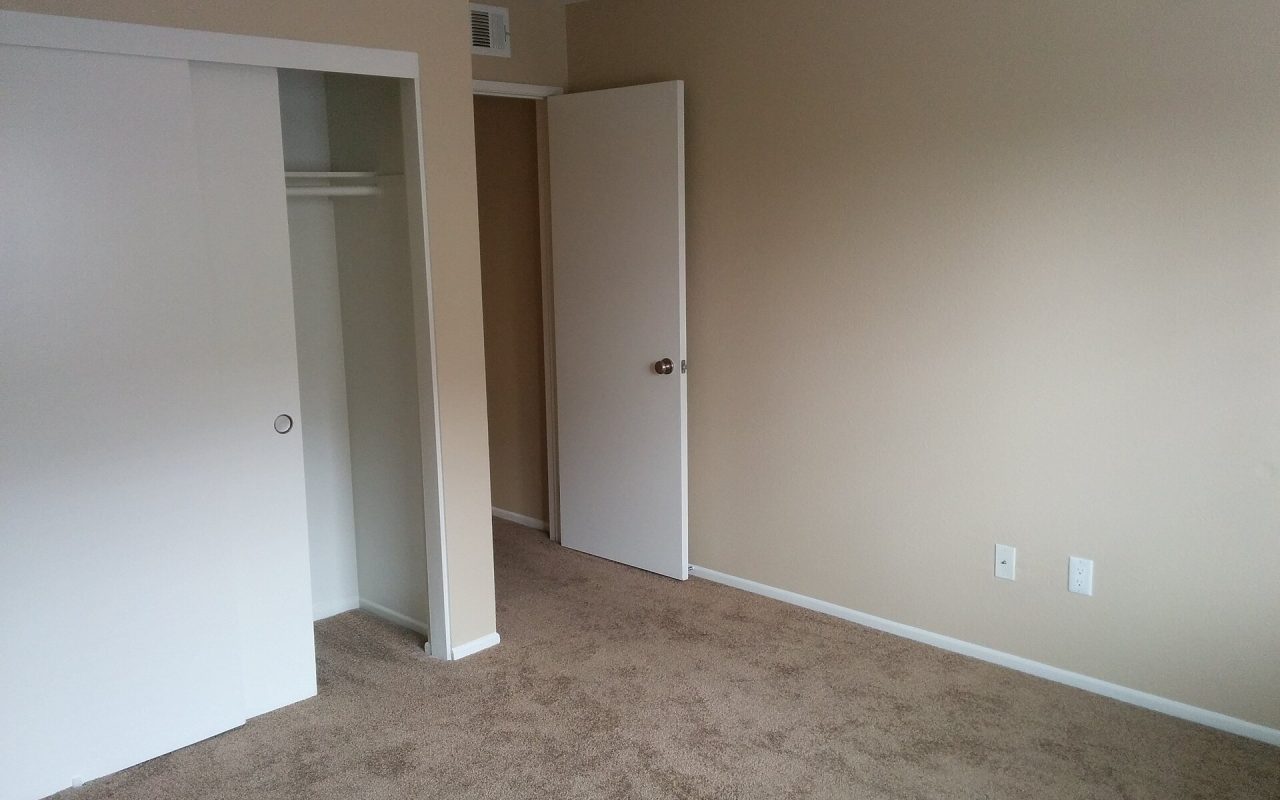
An unfurnished room measures far longer than the same room with a sofa in it.
Treating before the furniture arrives leads to over-absorption once the room is lived in.
Wait until the room is furnished, then measure, then buy.
The difference can be 0.2 seconds, which is the whole target range.
Furniture first is the cheapest acoustic advice available.
Option fourteen: measuring after every change
Keep the microphone in the same position and the same settings for every measurement.
Save the curves and label them with the date and the change made.
A folder of measurements is worth more than any advice column.
It also shows when a change made no difference, which happens often.
Reverberation time is a number that can be measured, and treating a room without measuring it is guesswork dressed as acoustics.